
Marble vs Granite vs Quartz Countertop Comparison Guide
Marble vs Granite vs Quartz Countertop Comparison Guide
Marble vs Granite vs Quartz comparison of durability maintenance heat resistance stain resistance and cost for kitchens and bathrooms
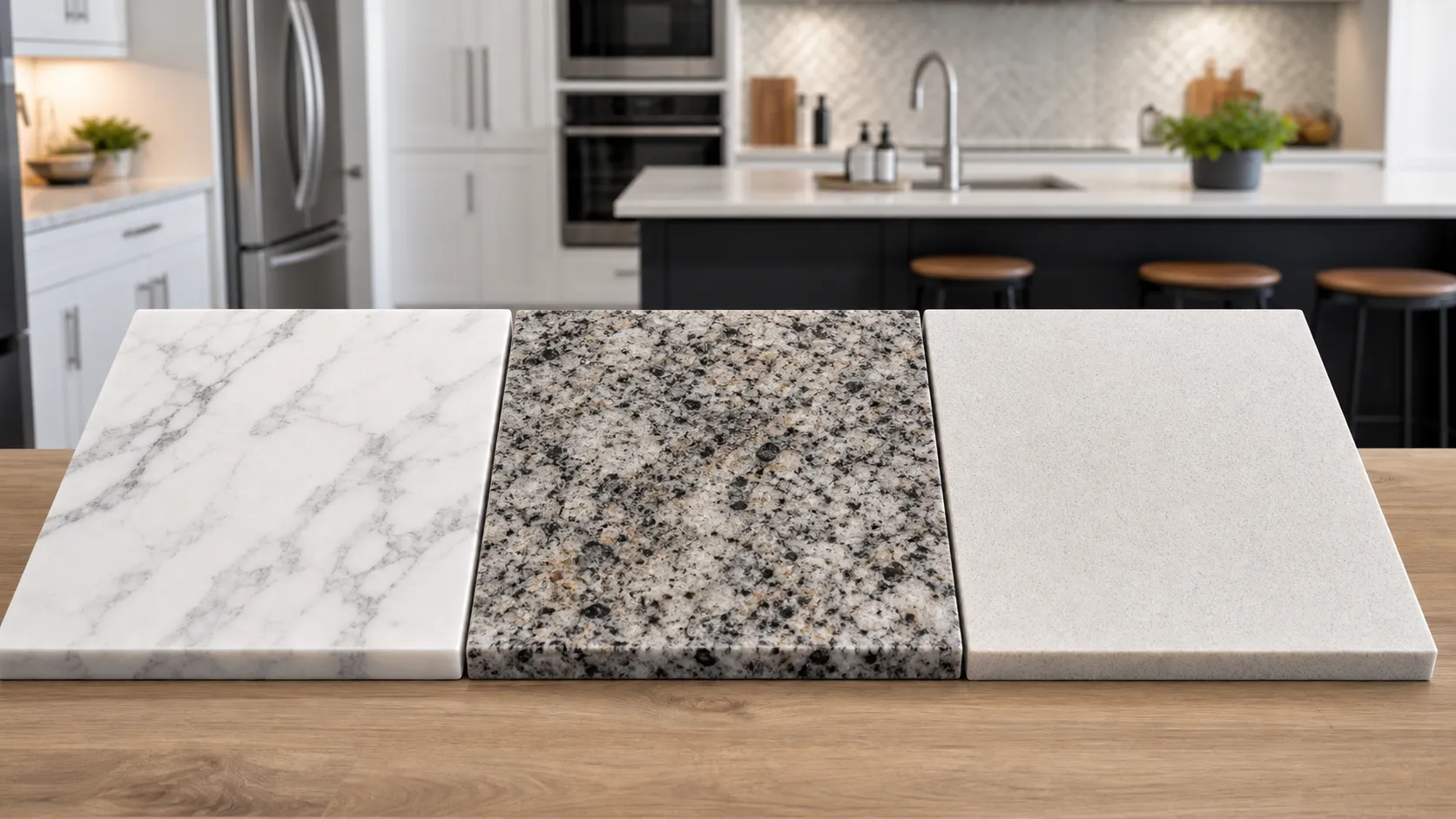
Marble vs Granite vs Quartz: Material Origins and Composition
Choosing the right stone surface comes down to understanding what goes into each slab. Before evaluating performance or aesthetic appeal, we need to look at how these three popular materials are formed and engineered.
Marble: Timeless Metamorphic Elegance
Formed deep within the earth through the intense metamorphism of limestone, marble is a pure natural stone slab celebrated for its timeless beauty.
-
- Physical Structure: Composed primarily of recrystallised calcite or dolomite minerals.
- Aesthetic Appeal: Features soft, organic veining with subtle colour gradations that cannot be artificially replicated.
- Tactile Feel: Cool to the touch with an opulent texture that adds immediate prestige to interior spaces.
- Natural Variation: Every single slab is entirely unique, displaying distinct geological variations and individual character.
Granite: Dense Igneous Strength
Forged from cooling molten magma beneath the earth’s crust, granite is a coarse-grained igneous rock built for extreme durability and demanding environments.
-
- Mineral Composition: A rich, interlocking blend of natural quartz, feldspar, and mica minerals.
- Structural Density: Exceptional physical density that provides high impact resistance and long-term durability.
- Visual Texture: Distinctive crystalline patterns with a speckled, multi-dimensional appearance.
- Natural Character: Offers a solid, earthy aesthetic with rich tone variations across different quarry blocks.
Quartz: Engineered Surface Performance
Unlike mined natural stone, an engineered quartz surface is manufactured to combine raw natural strength with modern manufacturing precision.
-
- Material Formula: Formulated using 90–95% crushed natural quartz aggregate bound with high-performance polymer resins and raw pigments.
- Poreless Structure: Engineered to create a 100% non-porous surface that prevents liquid absorption entirely.
- Visual Uniformity: Delivers consistent colour tone and pattern predictability across large-scale installations.
- Low Maintenance: Purpose-built for modern convenience without requiring periodic surface sealing treatments.
Direct Comparison Matrix: Marble vs Granite vs Quartz
When choosing between marble vs granite vs quartz, understanding their fundamental physical differences helps you select the ideal surface for your space. We have broken down the core functional metrics to show how these three materials perform side by side in everyday conditions.
Key Metric Comparison Table
| Metric | Marble | Granite | Engineered Quartz |
|---|---|---|---|
| Material Origin | Natural Metamorphic Stone | Natural Igneous Stone | Engineered Composite Surface |
| Mohs Hardness Scale | 3 to 4 (Soft) | 6 to 7 (Hard) | 7 (Very Hard) |
| Surface Porosity | High (Porous) | Low to Medium (Slightly Porous) | 100% Non-Porous |
| Sealing Frequency | Every 6 months | Every 12 to 24 months | Never required |
| Countertop Heat Resistance | Up to 200°C (Etching risk) | Up to 250°C+ (High resistance) | Up to 150°C (Resin burn risk) |
| Stain & Acid Resistance | Low (Etches with citrus/vinegar) | High (When properly sealed) | Excellent (Acid and oil proof) |
| Routine Maintenance | High (Requires specialist care) | Medium (Periodic resealing) | Low (Soap and warm water) |
Core Material Performance Breakdown
-
- Material Origin & Formation: Marble is a natural metamorphic stone formed from compressed limestone, giving it soft, organic veining like our Panda White marble. Granite is a natural igneous stone formed from cooled volcanic magma, resulting in dense crystalline grains as seen in Pandora White stone. Engineered quartz is manufactured using 90–95% natural crushed quartz bound with polymer resins and pigments.
- Mohs Hardness Scale Stone Rating: Granite and engineered quartz rank between 6 and 7 on the Mohs scale, resisting scuffs and everyday cutlery marks. Marble sits softer at 3 to 4, making it prone to fine scratches and impact chipping if handled roughly.
- Porous Stone Sealing Frequency: Natural stones contain microscopic pores that absorb liquids if left untreated. Marble demands strict biannual sealing to block deep staining, whereas dense granite requires sealing every 1 to 2 years. An engineered quartz surface is completely non-porous and never requires sealing.
- Countertop Heat Resistance & Acid Exposure: Natural granite easily handles hot pans straight from the hob. Quartz tolerates heat up to 150°C, but direct contact with burning cookware can discolour the resin binders. Marble withstands moderate heat well, but acidic items like lemon juice, coffee, and vinegar cause immediate chemical etching on its surface.
Deep-Dive Performance Factors: Marble vs Granite vs Quartz
Countertop Heat Resistance and Thermal Shock
When comparing Marble vs Granite vs Quartz, thermal performance dictates how you handle cookware in busy kitchens.
-
- Granite: Boasts exceptional natural heat resistance. You can place hot roasting tins and pans straight from the oven onto granite without scorching or cracking.
- Engineered Quartz: Contains polymer resins that bind crushed quartz together. This limits safe surface temperatures to roughly 150°C. Exceeding this limit causes thermal shock, yellowing, or permanent resin burns.
- Marble: Handles moderate heat effectively, but sudden thermal shock can trigger micro-fractures along its organic veining.
Always use trivets or heat pads under hot cookware, especially on engineered quartz or delicate feature surfaces like our Pandora natural stone range.
Stain Resistance, Porosity, and Acid Etching
Everyday spills test a stone surface's resilience against absorption and chemical reactions.
-
- Engineered Quartz: A completely non-porous kitchen counter. Spills like coffee, red wine, oils, and stubborn turmeric curry sit on top without penetrating, making routine cleaning painless.
- Granite: Low porosity when properly sealed. It holds up brilliantly against dark liquids and cooking oils without discolouration.
- Marble: Highly porous and calcium-based. Acidic liquids like citrus juices, vinegars, and tomato sauces cause immediate acid etching—a chemical reaction that dulls polished surfaces. Managing marble requires prompt spill cleanups and periodic re-sealing.
Mohs Hardness Scale and Scratch Resistance
Daily durability depends on where a material sits on the Mohs hardness scale stone rating system.
| Material | Mohs Hardness | Daily Impact & Scratch Resistance |
|---|---|---|
| Engineered Quartz | ~7.0 | Extremely tough against knife scuffs, direct scratches, and heavy impact. |
| Granite | 6.0 – 7.0 | Dense igneous structure offers maximum resistance to impact, chipping, and wear. |
| Marble | 3.0 – 5.0 | Softer metamorphic rock. Scratches more easily and develops a natural patina over time. |
For high-traffic kitchens, quartz and granite maintain an unblemished surface far longer. Options like our Treasure Land engineered slabs provide high scratch resistance for heavy prep zones.
Hygiene, Mould, and Moisture Control
Managing ambient humidity and wet environments requires surfaces that deny bacteria a breeding ground.
-
- Bacterial Prevention: The non-porous structure of engineered quartz leaves no microscopic pores to harbour bacteria, mould, or mildew.
- Moisture Barriers: Properly sealed granite and marble resist water penetration, preventing damp stains and structural decay in high-humidity kitchens or luxury bathroom vanities.
Application Framework: Where to Install Each Material
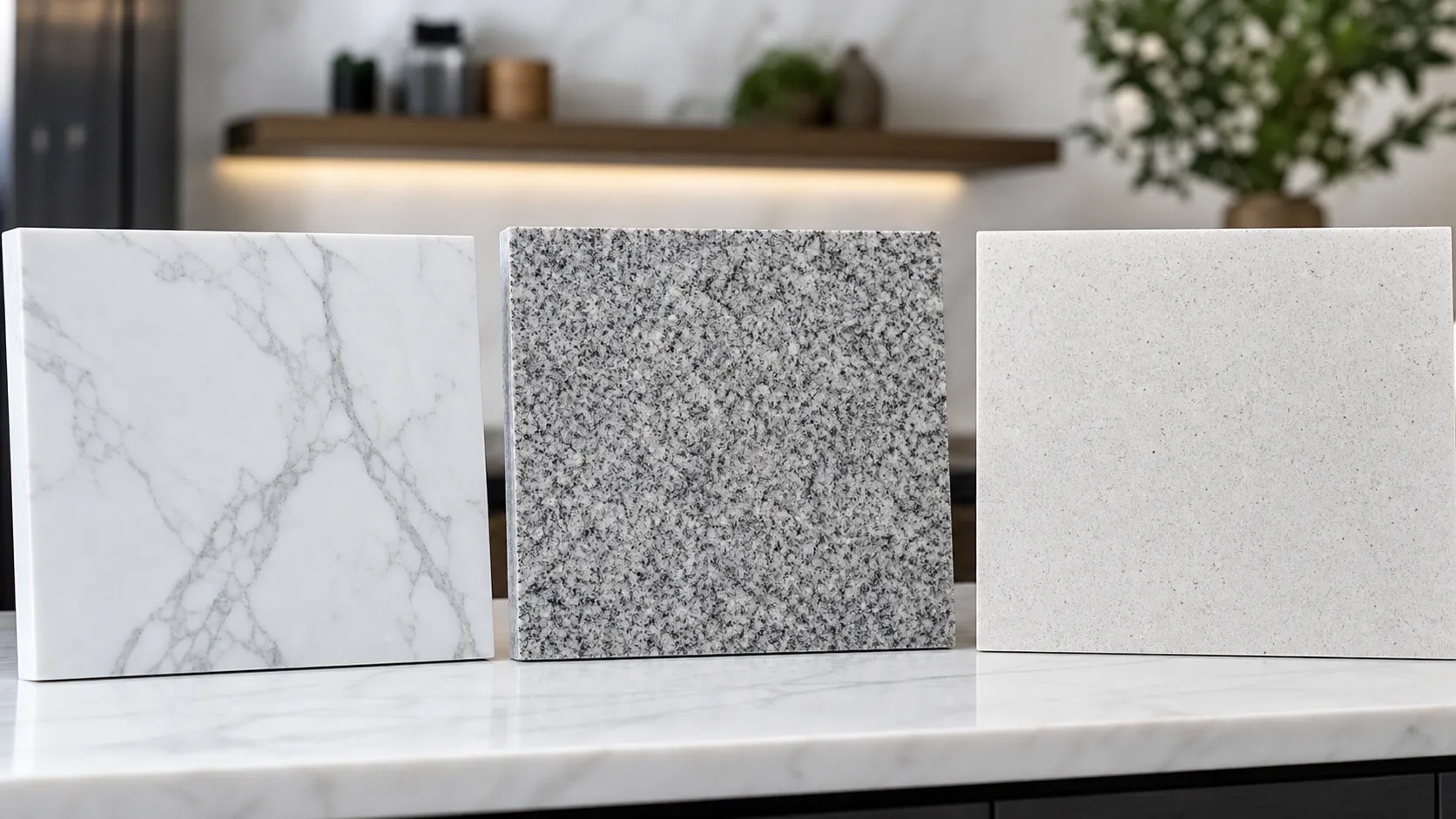
Choosing between Marble vs Granite vs Quartz comes down to matching the physical properties of the stone to the specific demands of your space. We break down exactly where each surface excels to ensure your investment lasts for decades.
Heavy-Duty Wet Kitchens
In heavy-use wet kitchens where intense frying, oil splatters, and rich spices are a daily routine, durability and stain resistance are non-negotiable.
-
- Engineered Quartz: A high-grade engineered quartz surface is non-porous, making it virtually immune to stubborn curry stains, dark oils, and aggressive daily scrubbing.
- Dense Sealed Granite: Darker, dense granites offer exceptional heat tolerance and impact resistance. Once properly sealed, granite handles heavy cast-iron cookware and direct thermal contact effortlessly.
Showpiece Dry Kitchens & Island Bars
Dry kitchens and social islands serve as visual centerpieces designed for entertaining, light prep work, and serving.
-
- Natural Marble: The ultimate choice for a kitchen island stone countertop. Marble’s naturally cool surface temperature makes it a baker’s favourite for rolling pastry, while its soft organic veining brings effortless luxury to any open-plan layout.
- Marble-Look Quartz: Provides the elegant aesthetic of natural veining with zero worries about citrus juice or red wine spills during social gatherings.
Bathroom Vanities & Feature Walls
High-moisture environments and architectural focal points demand materials that blend aesthetic authority with moisture resistance.
-
- Bookmatched Marble: Nothing compares to a dramatic bookmatched marble feature wall, where mirrored natural slabs create a striking architectural focal point in luxury bathrooms or living areas.
- Custom Quartz Slabs: Ideal for custom vanity top fabrication, resisting hair dyes, cosmetics, and standing water without requiring continuous sealing cycles.
The KimwayStone Advantage: Fabrication Excellence
Why raw slabs are only half the story
Sourcing a magnificent raw slab is only the beginning. When assessing marble vs granite vs quartz, raw material quality means little without precision processing, exact cutting, tailored edge profiling, and expert installation. An improperly cut stone slab can easily crack, misalign, or chip under daily stress. We bridge the gap between raw stone and a flawless, durable surface built to last.
Custom stone edge profiling
Edge treatments do more than elevate aesthetics; they guard vulnerable edges against impact damage and chipping in busy households.
-
- Mitred Edges: Provide the striking visual effect of a thick, massive stone block without adding unnecessary weight.
- Pencil Round Edges: Feature subtle top-edge curves that soften sharp corners, reducing chip risks in high-traffic kitchens.
- Bullnose Edges: Offer fully rounded profiles that maximize impact safety, perfectly suited for softer natural stones.
Precision CNC cutting and custom craftsmanship
Every architectural layout presents distinct structural requirements. Our custom stone fabrication combines advanced technology with master craftsmanship:
-
- Tailored Slab Selection: We inspect every slab—whether you choose statement natural veining like Pandora White or rich luxury features like Treasure Land—to secure perfect pattern flow and seam alignment.
- Precision CNC Machining: High-accuracy digital routing and water-jet cutting ensure tight joint tolerances and flawless cutouts for sinks and hobs.
- Master Finish: Hand-polishing and edge refinement yield clean joins, refined bevels, and structural integrity engineered for long-term reliability.
Care, Maintenance, and Investment Expectations
Understanding daily care and long-term maintenance requirements ensures your investment retains its aesthetic appeal and structural performance over decades of daily use.
Daily Stone Cleaning Protocols
Keeping your worktops pristine does not require harsh chemicals. In fact, aggressive cleaning agents like bleach, ammonia, or acidic bathroom descalers will etch natural marble and compromise the protective sealers on granite.
-
- Routine Care: A soft microfibre cloth with warm water and a few drops of mild pH-neutral liquid soap is ideal for everyday cleaning across all three surfaces.
- Specialised Cleaners: For natural granite and marble surfaces, use a dedicated pH-neutral stone cleaner to lift residue without degrading sealants.
- Products to Avoid: Bleach, oven cleaners, citrus-based sprays, vinegar, and abrasive scouring pads. These stripped compounds erode marble veining and dull quartz resin finishes.
Sealing Schedules & The Water Drop Test
Engineered quartz is 100% non-porous, meaning it never requires sealing. Natural marble and granite, however, possess minute capillary structures that require periodic sealing to repel water, cooking oils, and dark liquids.
-
- Granite Sealing Frequency: Dense granite varieties generally require resealing every 12 to 24 months.
- Marble Sealing Frequency: Soft, porous marble requires application every 6 to 12 months depending on usage intensity.
- The Water Drop Test: To check if your natural stone needs maintenance, spill a few drops of water onto the surface. If the water beads tightly, your seal is active. If the water absorbs within 10 to 15 minutes and leaves a dark patch, it is time to reapply a penetrating sealer.
Cost Factors and Long-Term Value
When evaluating Marble vs Granite vs Quartz, raw slab prices are only part of the financial equation. Total project costs are driven by material rarity, edge detailing, and fabrication complexity.
| Cost & Investment Factors | Marble | Granite | Engineered Quartz |
|---|---|---|---|
| Material Tier | Premium / Luxury | Mid to High | Mid to High |
| Porosity & Sealing | High (Requires frequent sealing) | Low to Medium (Periodic sealing) | Non-Porous (Zero sealing) |
| Fabrication Complexity | High (Requires delicate handling) | Moderate to High | Moderate |
| Expected Lifespan | Decades (Develops patina) | Lifetime | 25+ Years |
-
- Fabrication & Cutouts: Precision work—such as undermount sink cutouts, recessed drainer grooves, and custom edge profiles—requires advanced CNC processing to prevent edge chipping on natural stone.
- Long-Term Lifespan: While quartz offers low-maintenance peace of mind, granite provides unmatched structural longevity. Marble demands higher ongoing care but delivers irreplaceable elegance. Reviewing options within our premium stone slab collection helps align your material selection with both your design vision and maintenance preferences.
Frequently Asked Questions
Which countertop material is easiest to maintain for heavy daily cooking?
Engineered quartz is the clear winner for low-maintenance kitchen setups. Because it is a completely non-porous kitchen counter surface, it eliminates the need for periodic sealing and stands up effortlessly to aggressive scrubbing, spills, and daily wear. When comparing marble vs granite vs quartz purely on maintenance convenience, quartz requires the least amount of looking after.
Can you put hot pots and pans directly on quartz, granite, or marble?
Granite offers the highest countertop heat resistance and can generally tolerate hot pans, though using a trivet is always recommended to avoid thermal shock. Marble handles moderate heat but is prone to thermal stress. You must never place hot cookware directly onto an engineered quartz surface, as the polymer resins can scorch, discolour, or crack when exposed to temperatures exceeding 150°C.
How often do natural stone countertops like marble and granite need to be resealed?
The ideal porous stone sealing frequency depends heavily on the density of the slab and your daily usage. Generally, marble and lighter granites require sealing every 6 to 12 months to prevent deep staining. Denser, darker natural stone variations require much less frequent maintenance. Homeowners looking for premium, long-lasting options often browse our extensive natural stone collection to find highly dense materials that minimise upkeep.
Which material is best for resisting stubborn stains like turmeric, curry, and red wine?
Engineered quartz provides the absolute best stain resistance against turmeric, curry, and red wine due to its resin-bound, non-porous structure. Spills sit on the surface and can be wiped away easily. Properly sealed granite also offers reliable protection, but porous marble will quickly absorb these intense pigments, resulting in deep-set stains and permanent acid etching that is incredibly difficult to repair.