
Stone Selection Guide for Marble Quartz Dekton Comparison
Are you struggling to choose the perfect worktop for your next project?
Selecting the ideal surface can make or break your design—not to mention your budget. That is exactly why we created this practical stone selection guide: Marble, Quartz, Dekton?
Whether you crave the timeless luxury of natural marble, the low-maintenance appeal of quartz, or the ultra-resilient durability of Dekton, this guide cuts straight through the noise.
Read on to discover how each material performs on durability, aesthetics, maintenance, and cost—so you can invest in the right stone with complete confidence.
Let's dive straight in.
Stone Selection Guide: Marble, Quartz, Dekton?
Choosing the right worktop comes down to how you cook, clean, and live. Every surface brings specific engineering trade-offs between visual appeal, thermal durability, and everyday maintenance.
Below is our technical comparison matrix to help you evaluate natural marble, engineered quartz, and Dekton sintered stone across core performance metrics.
Side-by-Side Technical Matrix
Technical MetricNatural MarbleEngineered QuartzDekton (Sintered Stone)Material CompositionMetamorphic crystallised limestone (Calcite/Dolomite)90–93% natural quartz aggregate + 7–10% polymer resins100% natural minerals compacted under 25,000 tonnes (TSP technology)Mohs Hardness3 to 4 (Soft, prone to scratching)6 to 7 (High scratch resistance)7 to 8 (Extreme scratch resistance)Porosity & Absorption0.2% – 0.6% (Porous, requires sealing)< 0.05% (Non-porous)< 0.01% (Virtually zero porosity)Heat ResistanceUp to 150°C (Risk of cracking & discolouration)Up to 150°C (Resin scorches easily; requires trivets)Up to 300°C+ (Immune to direct pan heat)Stain & Acid ResistanceLow (Etches instantly with lemon, vinegar, wine)High (Resistant to household acids & spills)Total (Impervious to chemicals, turmeric, wine)UV StabilityHigh (Suitable for indoor & outdoor use)Low (Resin discolours/yellows under sunlight)Maximum (100% UV-proof, zero fading)
Quick-Look Trade-Offs
-
Natural Marble: Unmatched geological beauty and prestige. Demands routine sealing, immediate wipe-downs of acidic spills, and acceptance of natural surface patina over time.
-
Engineered Quartz: The optimal balance for busy indoor family kitchens. Delivers non-porous stain resistance and low daily maintenance, but cannot tolerate direct heat or outdoor UV exposure.
-
Dekton Sintered Stone: Maximum industrial-grade durability. Offers complete immunity to high heat, hot pans, and deep pigment stains, but requires certified precision fabrication to avoid edge-chipping risks.
Marble Surfaces: The Timeless Luxury of Natural Metamorphic Stone
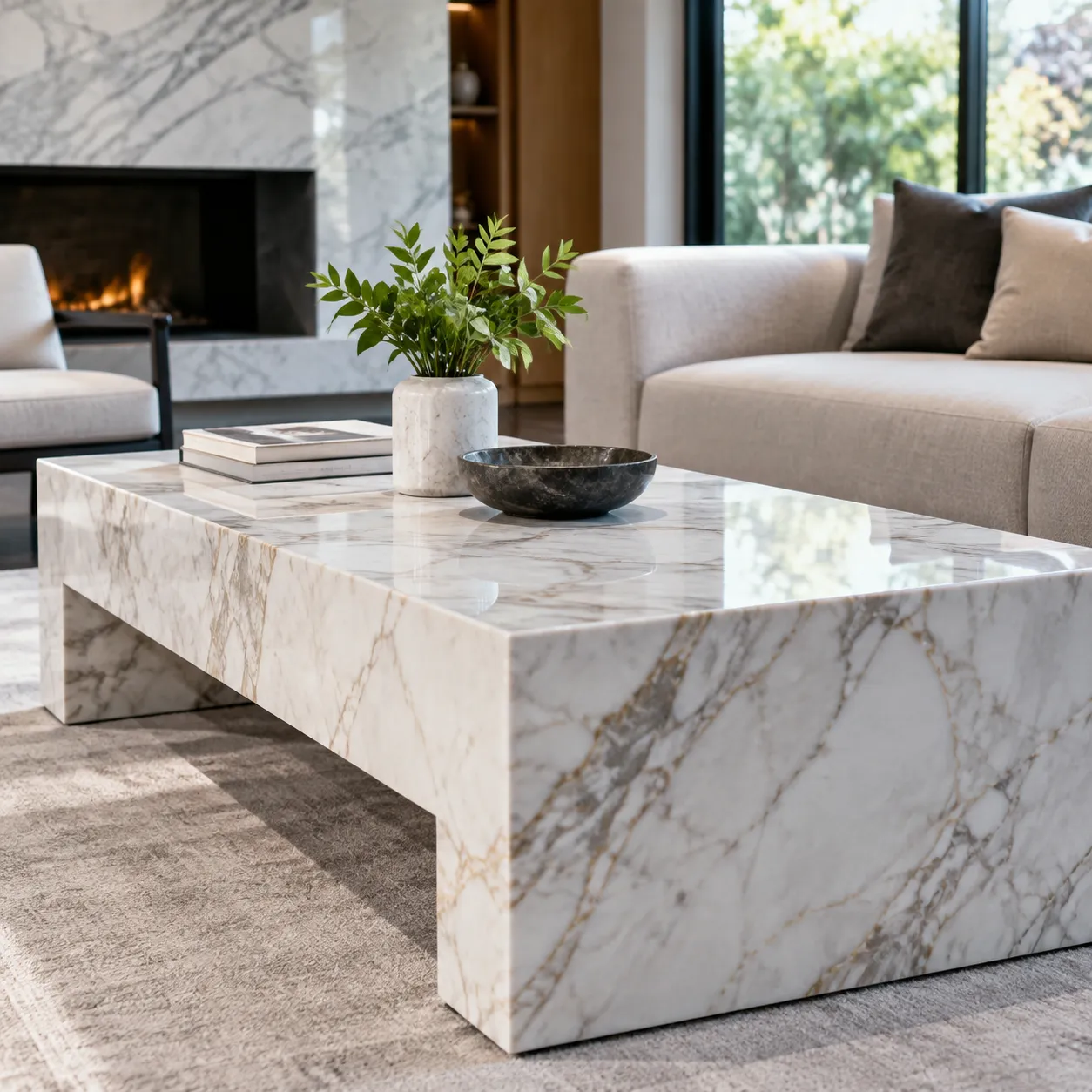
Nothing rivals the organic prestige and tactile depth of authentic metamorphic rock. In our stone selection guide comparing marble, quartz, and Dekton, natural marble stands apart as an authentic design statement where every slab is completely unique.
Geological Veining, Bookmatching, and High-Prestige Character
Formed under immense underground heat and pressure, natural marble features distinct mineral pathways that cannot be perfectly replicated by manufactured alternatives: Organic Variation: Each block delivers unique flow, tone shifts, and crystalline depth. Symmetrical Bookmatching: Striking geological veining allows for mirror-matched installations, creating dramatic focal points with high-contrast surfaces such as Panda White marble or rich linear textures like Palisandro Brown stone. Natural Coolness: Marble naturally retains a low surface temperature, making it ideal for pastry work and luxurious decorative cladding.
Acid Sensitivity, Etching Risks, and Mandatory Sealing Protocols
Natural elegance comes with clear physical trade-offs. Marble consists primarily of calcium carbonate, making it fundamentally porous and chemically reactive: Chemical Etching: Acidic liquids like lemon juice, vinegar, wine, and harsh detergents dull the polished surface within seconds, leaving permanent cloudy marks that standard cleaning cannot remove. Staining Vulnerability: Without an active barrier, dark liquids penetrate the porous pores, resulting in deep subsurface discolouration. Maintenance Regimen: We specify high-grade penetrating sealers applied every 6 to 12 months, paired strictly with neutral pH stone cleaners to preserve surface integrity.
Best Placement: High-Impact and Low-Acid Zones
To maximise visual value while avoiding unnecessary wear, we position natural marble in dedicated living and display spaces: Dry Kitchen Display Islands: Ideal for entertaining, breakfast bars, and serving areas with low exposure to acidic cooking prep. Master Ensuite Vanities: Brings boutique hotel styling to bathroom counters (avoiding harsh chemical cosmetics). Feature Walls and Fireplace Surrounds: Elevates vertical installations where physical impact and chemical spills are zero risk.
Engineered Quartz: Practical Uniformity and Everyday Durability
Engineered quartz remains the benchmark for busy family kitchens that require visual consistency and minimal upkeep. By combining roughly 90% to 93% crushed natural quartz mineral aggregates with polymer resins and colour pigments, this surface solves the porosity issues inherent in raw stone.
Mineral Aggregate Build and Non-Porous Performance
-
Zero sealing required: Unlike metamorphic rock, quartz is an entirely non-porous kitchen slab. It repels everyday liquids including coffee, red wine, lemon juice, and cooking oils.
-
Hygienic prep surfaces: The lack of microscopic surface pores stops bacteria, mould, and mildew from penetrating the material.
-
Uniform design: Slab patterns remain consistent throughout, eliminating unexpected visual flaws during fabrication. For homeowners seeking striking, repeatable aesthetics, engineered slabs such as KSM8005B Pandora provide dramatic veining alongside dependable structural integrity.
Thermal Limits and Environmental Vulnerabilities
While quartz withstands heavy physical impact, its polymer binders introduce specific practical limitations:
-
Resin scorching: Quartz has low quartz stone thermal shock resistance. Direct contact with hot roasting trays, skillets, or boiling pans will burn the resin binder, leaving permanent white rings or brown scorch marks. Always use heat pads or trivets.
-
UV degradation: Polymer resins react poorly to prolonged exposure to direct sunlight. Ultraviolet rays cause gradual discolouration and surface yellowing, restricting quartz strictly to interior installations.
-
Chemical sensitivity: Harsh chemical cleaners with high pH levels, oven cleaners, and bleach can dull the factory polish.
Best Placement: High-Traffic Family Zones
We specify engineered quartz primarily for busy domestic prep counters, utility rooms, and central kitchen islands where daily life demands hard-wearing, wipe-clean practicality without a strict maintenance routine.
Dekton Sintered Stone: Maximum Heat and Scratch Resistance
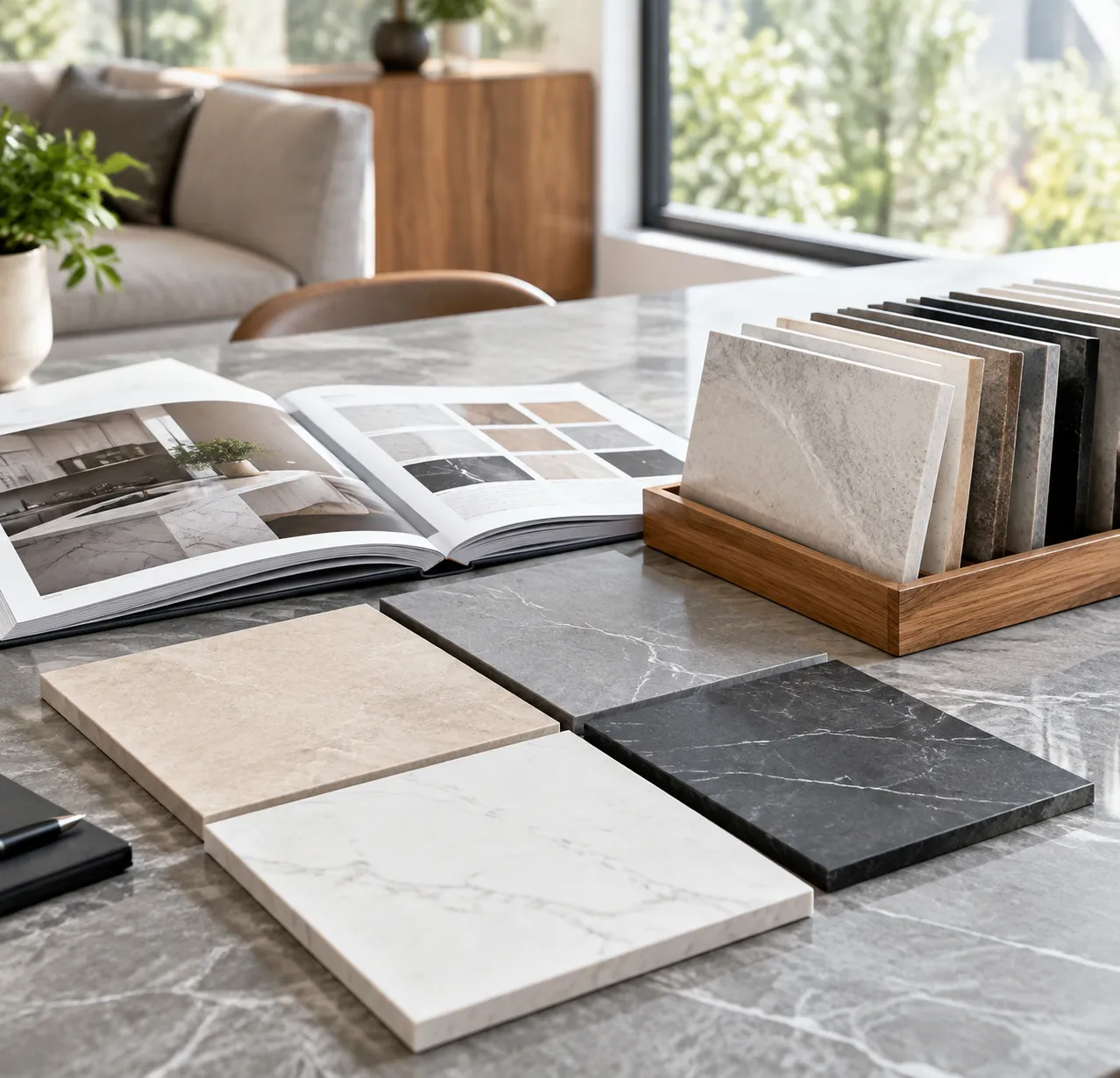
When a project demands absolute resilience against direct heat, severe abrasion, and harsh weathering, Dekton sintered stone stands in a league of its own. Manufactured through Particle Sintering Technology (PST), this material subjects 100% natural minerals to 25,000 tonnes of pressure and temperatures exceeding 1,200°C.
Because it contains zero polymer resins or plastic binders, Dekton eliminates the structural vulnerabilities commonly found in engineered quartz.
Uncompromising Performance in Demanding Kitchens
For heavy-use environments, Dekton delivers unmatched day-to-day resilience:
-
Total Thermal Immunity: You can place red-hot cast iron skillets and boiling pans straight off the hob directly onto the surface without burn marks, scorching, or thermal shock cracking.
-
Zero Porosity and Stain Defiance: With near-zero water absorption, stubborn culprits like turmeric, red wine, citrus juices, and hot cooking oils cannot penetrate the slab.
-
UV and Weather Stability: The mineral blend is completely UV-stable, meaning colours and surface finishes will never fade, yellow, or warp under direct sunlight.
-
High-Grade Scratch Defence: Everyday kitchen cutlery, heavy cleavers, and abrasive cookware will not gouge the compact surface.
+------------------------------------+------------------------------------------+ | Specification | Dekton Performance Metric | +------------------------------------+------------------------------------------+ | Composition | 100% Raw Minerals (Zero Resin) | | Heat Resistance | Up to 300°C+ (Direct Pan Contact Safe) | | Stain Resistance | Maximum (Zero Porosity / Food Safe) | | Scratch Resistance | Mohs Hardness 7-8 | | Recommended Edge Profile | 2mm–3mm Eased / Micro-Bevel Radius | +------------------------------------+------------------------------------------+
Critical Fabrication and Edge Considerations
While Dekton is virtually indestructible on its flat face, its extreme density introduces distinct fabrication challenges:
-
Edge Chipping Risks: The material's glass-like hardness makes sharp 90-degree edges vulnerable to chipping if struck directly with heavy metal pans. We mitigate this by machining a mandatory 2mm to 3mm radius or micro-bevel along high-traffic edges and undermount sink cutouts.
-
Precision CNC and Waterjet Cutting: Sintered slabs hold high internal tension. Fabrication requires high-pressure waterjet machinery, specialised diamond tooling, and fully calibrated cutting beds to prevent slab fracture during production.
Best Placement Across the Home
Dekton is the premier choice where high heat, constant moisture, or outdoor exposure would compromise standard stone. While designers often choose dramatic natural statements like Pandora Lux for ambient dry kitchen features, Dekton is best reserved for:
-
Heavy-Duty Wet Kitchens: High-flame wok cooking, oil frying, and daily spice preparation.
-
Outdoor Kitchens & BBQ Stations: External counters requiring full resistance to open flames, frost, rain, and UV degradation.
-
Alfresco Dining Patios & Cladding: Hard-wearing architectural surfaces subjected to direct weather and heavy foot traffic.
Stone Selection Guide: Marble, Quartz, Dekton for Wet vs Dry Kitchens
Cooking styles dictate stone performance. Choosing the wrong slab for the wrong zone leads to permanent surface damage, discolouration, and costly repairs. We evaluate surfaces based on actual kitchen habits rather than showroom aesthetics.
Wet Kitchens: High Heat, Heavy Spices, and Grease
Wet prep areas demand an impervious worktop that withstands thermal shock, aggressive cleaning, and heavy pigment exposure.
-
Heat and Splatter: Intense wok cooking and rapid pan transfers will scorch engineered quartz resins. Dekton sintered stone handles direct contact with red-hot cookware without blistering.
-
Staining Agents: Turmeric, chilli oils, and acidic citrus penetrate porous natural stone within minutes. Sintered stone features near-zero porosity, preventing stubborn spice pigments from bonding with the slab.
-
Daily Wear: Heavy chopping and constant scrubbing quickly dull delicate sealers on natural marble. For heavy-duty prep, non-porous sintered compact surfaces eliminate the risk of acid etching.
Dry Kitchens: Statement Islands and Display Counters
Dry kitchens serve as social focal points where visual depth and bespoke finishes take priority over extreme heat resistance.
-
Visual Prestige: Marble remains unmatched for organic veining and tactile luxury on breakfast bars, waterfall islands, and feature cladding.
-
Low-Risk Prep: Light food staging, wine serving, and coffee stations present minimal etching hazards, making natural stone practical with standard impregnating sealers.
-
Dramatic Aesthetics: High-contrast statement surfaces such as Panda White stone or dynamic veined slabs like Pandora Gold create striking central islands without enduring punishing cooktop conditions.
Tropical Climates: Humidity, Absorption, and Efflorescence
High ambient humidity and moisture traps beneath sub-bases create distinct challenges for indoor and semi-outdoor kitchens.
-
Moisture Trapping: Dense, non-porous engineered slabs prevent sub-surface moisture absorption, stopping mould growth behind splashbacks.
-
Efflorescence Risks: Unsealed natural stones draw mineral-laden moisture in unconditioned or humid spaces, resulting in cloudy salt deposits beneath the surface.
-
Thermal Expansion: Rapid temperature swings between air-conditioned interiors and hot cooking zones require precise joint spacing and flexible adhesive bonding to prevent stress cracking.
Total Cost Breakdown: Material, Fabrication, and Long-Term Value

When planning your worktops using our Stone Selection Guide: Marble, Quartz, Dekton?, looking strictly at the raw material square-metre rate will mislead your budget. A realistic budget must account for three distinct cost layers: raw slab purchase, specialist fabrication, and long-term maintenance over a ten-year cycle.
Slab Supply vs. Custom Fabrication Costs
The raw slab typically represents only 40% to 55% of your final invoice. The remaining cost comes down to workshop tooling, handling risk, and installation complexity:
-
Natural Marble: Moderate-to-high raw slab price, but straightforward to cut and profile. However, fragile veining increases waste factors, raising overall material requirements.
-
Engineered Quartz: Predictable, mid-range slab pricing with the lowest fabrication overhead. Standard diamond bridge saws handle cut-outs, drainage grooves, and edge profiling quickly.
-
Dekton & Sintered Stone: Premium slab price paired with the highest fabrication costs. Sintered stone requires high-end waterjet machinery, specialised bridge saw blades running at lower feed rates, and reinforced substrate framing to prevent tension cracking during transport and fitting. Ultra-compact options like our Pandora sintered stone slab deliver exceptional high-end aesthetics, but require certified stone fabricators to execute clean cut-outs and seamless mitred apron profiles.
Cost FactorNatural MarbleEngineered QuartzDekton / Sintered StoneMaterial Cost TierHigh to Ultra-LuxuryMid to PremiumPremium to Ultra-LuxuryFabrication ComplexityModerate (Standard tools)Low (Standard tooling)Very High (Waterjet / certified tooling)Edge Profiling / Cut-outsStandard costStandard cost+25% to +40% tooling premiumTransport & Breakage RiskHigh (natural fissures)Low (high flexural strength)High during transport before installation
10-Year Maintenance Expenses vs. Zero-Maintenance Surfaces
The financial comparison shifts dramatically once the worktops are installed and subjected to daily use.
-
Marble (High Lifecycle Cost): Requires professional penetrating sealers applied every 6 to 12 months. When acidic spills etch the calcite surface, deep honing and mechanical repolishing cost substantial sums per service visit.
-
Quartz (Zero Routine Maintenance): Non-porous surface requires no sealing, conditioning, or special treatments. Long-term costs remain zero, provided you avoid direct high-heat pan contact that scorches the polymer resins.
-
Dekton (Zero Maintenance & Indestructible Surface): Zero porosity, zero resin, and complete chemical resistance. Investing in high-performance slabs such as the Pandora Lux collection eliminates ongoing restoration budgets, sealant applications, and heat-damage repairs entirely, balancing its higher upfront fabrication investment over a decade of heavy kitchen use.
Fabrication Quality: Why Craftsmanship Trumps Raw Slabs
A premium slab of marble, quartz, or Dekton is only as good as the masonry workshop shaping it. Even the most expensive material will look mediocre if cut with uneven joints, jagged sink cut-outs, or mismatched vein directions. In our workshop, precision engineering and masonry expertise turn raw stone into seamless architectural features.
Precision Cutting, Edge Profiling, and Dry-Lay Alignment
Achieving flawless countertop installations requires strict digital cutting tolerances and hands-on dry-lay planning:
-
5-Axis CNC & Bridge Saw Cutting: We cut every slab using high-pressure waterjets and bridge saws to eliminate micro-fractures, which is critical when working with ultra-compact surfaces prone to edge tension.
-
Bespoke Edge Profiling: Mitred aprons, shark-nose profiles, and rounded pencil edges must be calibrated to the specific stone density to prevent chipping along high-impact sink and hob cut-outs.
-
Dry-Lay Layout Matching: Before making a single cut, we digitally map the slab layout to align flowing mineral veins across waterfall drops, corner joints, and splashbacks.
Working Directly with Experienced Stone Fabricators
Sourcing materials directly through our premium stone slabs inventory eliminates intermediary markups and guarantees accountability from initial slab curation to on-site installation. Direct fabricator oversight ensures structural reinforcement for overhangs, flush undermount sink integration, and clean, near-invisible silicone colour-matched seams built to endure daily kitchen wear.
Stone Selection Guide: Marble, Quartz, Dekton? Decision Blueprint
Selecting the right worktop comes down to matching stone performance with how you actually use your space day to day. We evaluate material capabilities against daily cooking habits, maintenance tolerance, and environmental exposure to remove the guesswork.
When to Pick Marble for Natural Elegance and Organic Prestige
Natural marble remains unmatched for luxury aesthetic value and architectural character. We recommend marble for:
-
Low-impact zones: Master bathroom vanities, fireplace surrounds, and dry kitchen display islands.
-
Bespoke design features: Bookmatched splashbacks and waterfall islands where natural, one-of-a-kind veining is the focal point.
-
Baking and pastry prep: Naturally cool surface temperatures ideal for dough handling.
-
The trade-off: Requires regular sealing and an acceptance of natural patina, as acidic spills will etch the calcite surface.
When to Choose Quartz for Balanced Family Living and Easy Care
Engineered quartz delivers uniform consistency and stress-free daily utility for active households. Check our marble vs granite vs quartz countertop comparison guide for detailed material specs. We recommend quartz for:
-
Main family kitchens: High-traffic prep zones subject to spills from coffee, wine, and everyday condiments.
-
Low-maintenance routines: Non-porous slabs that never require chemical sealing or specialist cleaners.
-
Consistent colour palettes: Modern interior schemes requiring uniform tone across expansive runs.
-
The trade-off: Limited heat tolerance; hot pans straight from the hob will scorch the polymer resin binding.
When to Invest in Dekton for Heavy-Duty Cooking and Outdoor Resilience
Dekton sintered stone is engineered for extreme physical and thermal stress. We specify Dekton for:
-
Heavy-duty cooking zones: Worktops directly adjacent to high-output gas burners, induction hobs, and wok stations.
-
Outdoor kitchens and barbecue stations: 100% UV-stable composition that will not fade, warp, or degrade in direct sunlight or heavy rain.
-
Scratch and stain immunity: Total resistance to scorching pans, heavy spice pastes, and sharp knives.
-
The trade-off: Requires expert fabrication and rounded edge profiles to minimise the risk of edge chipping on sharp impact.
Lifestyle Match Matrix
Household PriorityRecommended MaterialPrimary BenefitCare RequirementHigh Visual PrestigeNatural MarbleAuthentic geological veiningRegular sealing; clean acids immediatelyEffortless Family LivingEngineered QuartzNon-porous stain resistanceUse trivets for hot cookwareMaximum Heat & Outdoor DutyDekton Sintered StoneTotal heat and UV immunityEnsure precision edge fabrication
For custom dimensions and specialised edge details, reference our stone selection guide to align your architectural layout with the optimal surface fabrication.
Stone Selection Guide: Marble, Quartz, Dekton? Frequently Asked Questions
Can Dekton chip around corners and sink cutouts?
Yes, Dekton can chip if struck with substantial force by heavy, hard objects like cast-iron pans around exposed edges and undermount sink cutouts. While sintered stone offers exceptional surface scratch resistance, its ultra-compact mineral density makes it inherently brittle under point impact. We minimise Dekton edge chipping risks by applying a slight radius or chamfer (such as a 2mm to 3mm pencil round or bevelled edge) rather than leaving sharp, 90-degree arrises, distributing impact energy much more effectively across high-contact zones.
Can you place boiling-hot pans directly on quartz counters?
No, you should never place boiling-hot cookware directly onto engineered quartz. Quartz slabs consist of roughly 90% natural quartz aggregates bound by 7% to 10% polymer resins and pigments. These polymer resins have limited quartz stone thermal shock resistance and will scorch, blister, or yellow permanently when exposed to temperatures exceeding 150°C. Sudden temperature shifts can also crack the slab. Always use silicone trivets or heat pads under hot pots and roasting pans.
How often do natural marble countertops need to be resealed?
Natural marble surfaces in kitchens and master vanities require resealing every 6 to 12 months, depending on your daily usage and cleaning routine. Because natural marble is a porous metamorphic limestone, it readily absorbs liquids that lead to deep-set discolouration and acidic etching. We advise performing a simple water-drop test: sprinkle a few drops of water on the counter; if the water darkens the stone within 10 minutes, the protective barrier has worn away. Sourcing high-grade penetrating sealers through a trusted marble, granite, and quartz supplier ensures the stone repels moisture effectively without dulling its polished or honed finish.
Which stone surface is best for preventing curry, chili, and oil stains?
Dekton sintered stone is the undisputed leader for preventing stubborn food and oil stains, followed closely by engineered quartz:
-
Dekton: Features zero porosity and contains no polymer resins. Turmeric, chilli oils, red wine, and citrus juices remain strictly on the top surface without penetrating the slab, allowing for simple wipe-down cleaning even after sitting overnight.
-
Engineered Quartz: Provides an impenetrable, non-porous surface that resists standard cooking spills, though harsh chemical cleaners or sustained exposure to intense turmeric pastes can occasionally leave faint surface marks on light-coloured slabs if left unattended for days.
-
Natural Marble: Highly susceptible to acid etching and pigment absorption, making it unsuitable for heavy Asian wet-kitchen prep unless you accept an aged, natural patina over time.